
Columbus Previous Resident Sources
A good address history separates ownership from occupancy. The CCG Public Access Site supplies the current owner, parcel facts, sales history, and a starting legal description. Deeds then establish dated transfers. Directories and census schedules add people who may never appear in the title chain. Permits and fire-insurance maps describe the building rather than its residents, yet they often explain why a household arrived, moved, or vanished from the same number.
| Source | Local span | Custodian | Best evidence |
|---|---|---|---|
| Deed index | Online cutoff unpublished | Muscogee Clerk and GSCCCA | Title chain and legal description |
| Digitized directories | Verified items, 1859-1951 | DLG and Columbus library | Names, work, and addresses |
| Walsh street guide | 1898-99 | DLG | Occupants, businesses, and vacancies by number |
| Federal census | Public through 1950 | NARA and library databases | Enumerated households |
| Sanborn maps | Verified 1885-1923, later reference to 1929 | Library of Congress and DLG | Footprint, use, and block number |
| Permit archive | Start date unpublished | Inspections and Code | Work, date, owner, and contractor |
Start with the latest reliable record and move back. For a recent Columbus property, that means the parcel and deed trail. For an address from the late nineteenth century, the Walsh street guide can lead. A missing online year is a signal to call or visit the keeper, not proof that the record was lost.
Trace Muscogee Previous Owners
The Muscogee County Clerk of Superior and State Courts records deeds, liens, plats, and real-estate UCC filings. Its Real Estate Division is at 100 10th Street, second-floor tower, and answers records questions at 706-653-4358, option 1. The local index and the statewide GSCCCA system are discovery tools. Since no official source publishes the local online cutoff, older work must allow for the counter, deed books, or Georgia Archives county microfilm.
- Find the parcel in the assessor search. Save the owner, sales entries, parcel number, and full legal description.
- Open the newest acquisition deed by its book and page. The seller is the grantor; the buyer is the grantee.
- Search that seller as a grantee before the sale date. Match the lot, block, subdivision, and other legal-description terms.
- Repeat the handoff. Record each instrument date and stable book-page reference.
- When the web trail ends, take the name, date range, and book-page clues to the Clerk or the microfilm catalog.
- Grantor and grantee
- The grantor transfers an interest; the grantee receives it.
- Chain of title
- The linked sequence of recorded transfers for the same land.
- Legal description
- The plat, subdivision, block, lot, or metes-and-bounds wording that identifies land even when its street address changes.
The Real Estate Division guide explains local recording and counter access. Its published hours are Monday through Friday, 8:30 a.m. to 5 p.m. Staff can help locate a record and explain copy mechanics, though they do not supply legal forms or legal advice.
The local records guide is also shown below. It gives previous-resident research a direct path from an online name hit to the official deed keeper.
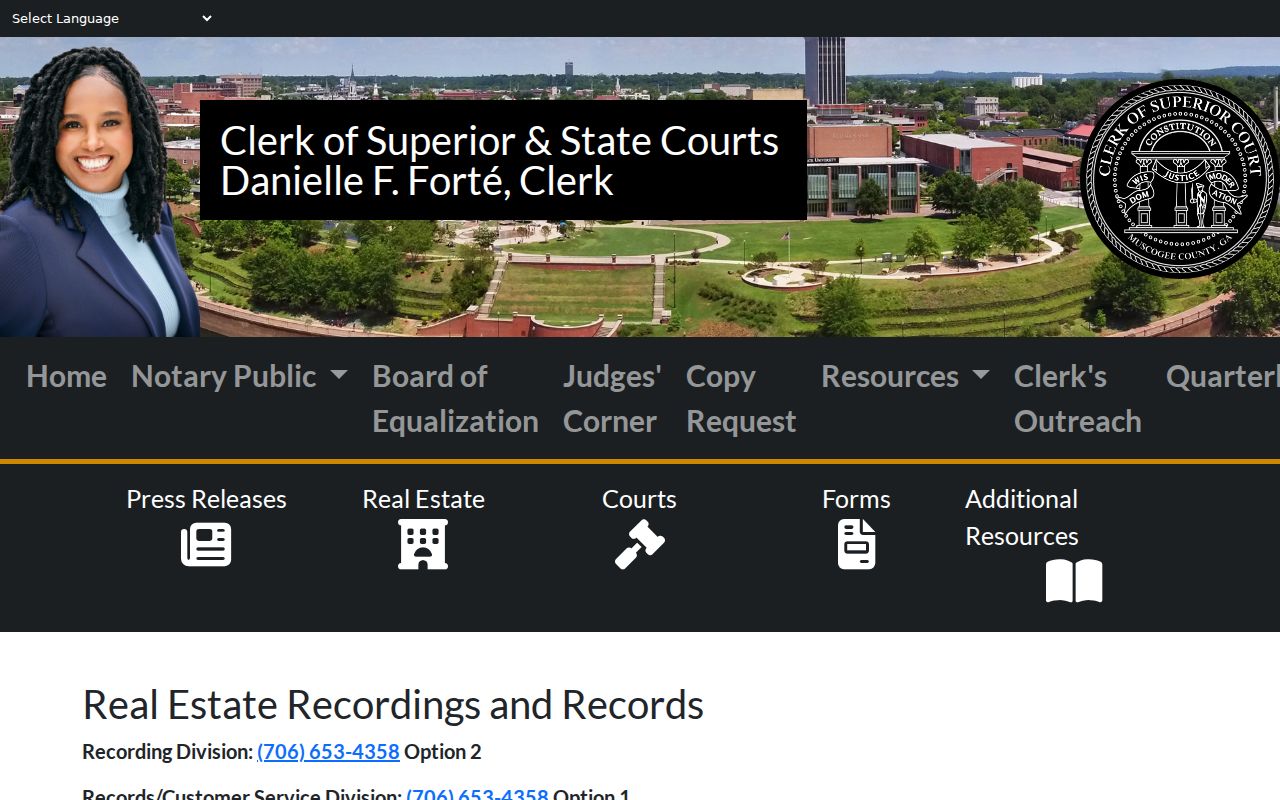
Use the office page to confirm current contact details before requesting an older book or a certified copy.
Columbus Deed Search Routes
The GSCCCA search hub offers several ways to keep a Columbus deed chain moving. Real Estate Name search is alphabetical. Book/Page takes county, book, and page. Property search accepts county plus subdivision, unit, block, and lot. PT-61 and some premium modes add document, address, daily, or map routes. Basic and account features differ, so note which path produced a result.
The statewide search screen below is assigned to Columbus previous residents because it carries durable land clues across name and street changes.
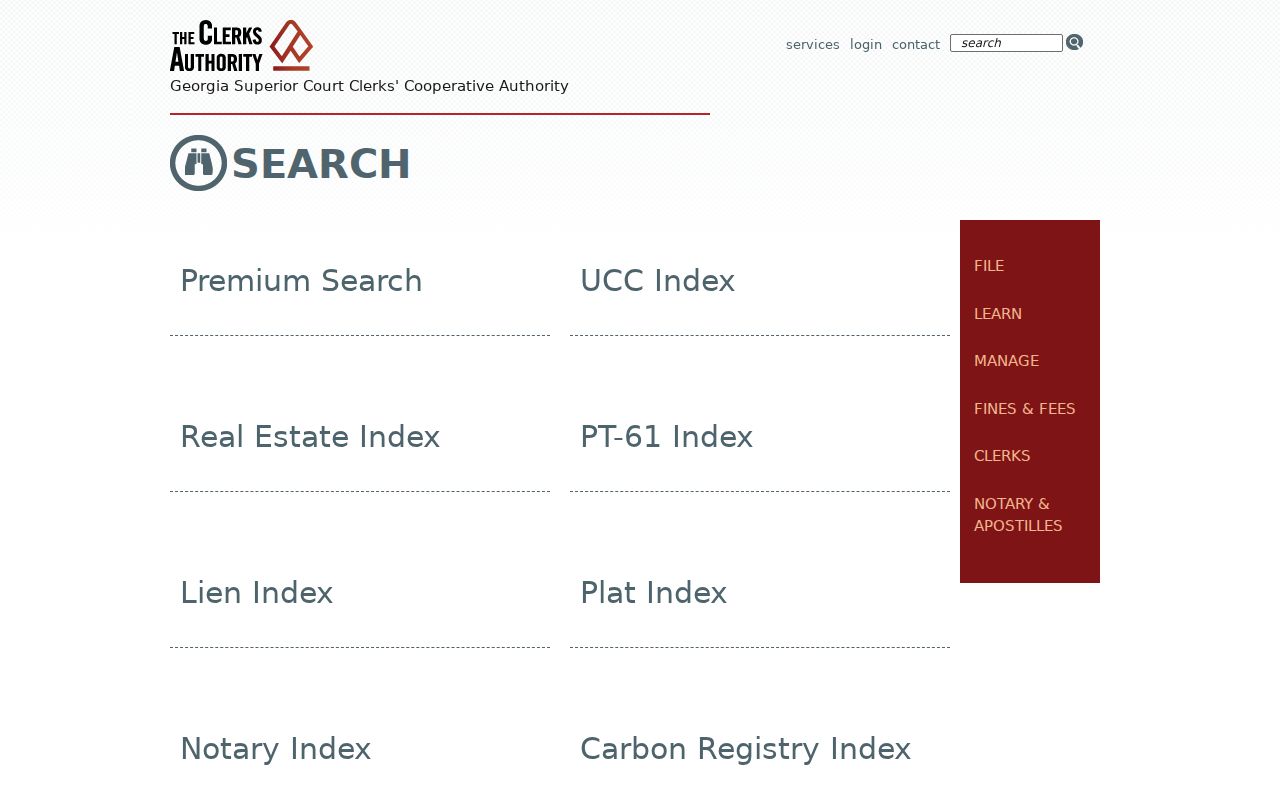
A result is an index lead. Confirm the linked instrument and legal description before adding a person to an address timeline.
Book/Page search is often the cleanest bridge between systems because it avoids spelling changes in a surname. Property mode is stronger when the same subdivision, unit, block, and lot recur across several instruments. PT-61 transfer declarations may add a dated name or address route, but some search functions require premium access. If the portal does not return an image, ask the Clerk for the instrument rather than treating the index line as the complete record.
Note: The oldest online hit does not establish the first year of Muscogee deed records, because the published cutoff remains unknown.
Columbus Addresses That Changed
A street number is less stable than the parcel. Columbus council records document changes that can break a simple address search. Ordinance 04-60 changed Boxwood Drive to Boxwood Boulevard and realigned or renamed Hamilton, 19th, and Talbotton segments. A 2002 action changed part of Franklin Drive to Adelaide Drive. Search both names in ordinances, directories, and newspapers when previous residents suddenly disappear.
Carry the subdivision, lot, block, and plat reference from one deed to the next. Those terms can preserve continuity when a modern number never appears in an old instrument. The original town survey began in 1828 and created a planned grid of numbered streets and avenues, so early directories and Sanborn sheets may describe a block in terms that differ from a current mailing address.
Columbus Past Household Trail
Owners are only one part of the story. The verified 1898-99 Walsh street guide lists house numbers, named occupants, businesses, vacancies, and cross streets. That lets an address lead to past residents directly. Other directory years can be searched by surname, initials, work, or address. OCR is machine-made and can be wrong, so verify every useful hit on the page image. The fuller history of the volumes belongs in the Columbus city directory.
- Search the closest directory year by surname and address. Copy the entry exactly.
- Check the street guide for the number and its place between cross streets.
- Compare the prior and next available volumes. Treat a gap as a move, death, omission, or OCR problem until another record resolves it.
- Pair the directory with the public census for 1900, 1910, 1920, 1930, 1940, or 1950.
- Use newspapers, the cemetery index, and probate files to close a deceased resident's trail.
The census adds age, birthplace, family ties, and other members enumerated in the home. A directory supplies a more frequent address and occupation. Neither should be stretched beyond what its fields show.
For a death or departure, continue through the Columbus Public Library's local indexes. Its resources include nineteenth-century death registers, an Enquirer-Sun death index for 1900-1918, a later obituary index, municipal cemetery records, and Muscogee will-book indexes. The index points to the event. The obituary, cemetery entry, or Probate Court estate file supplies the fuller evidence, subject to access limits.
Map Columbus Previous Residences
Sanborn fire-insurance maps show buildings, not a complete list of people. Verified Columbus sheets exist for 1885, 1889, 1895, 1900, 1907, 1918, 1921, and 1923, with a local reference extending through 1929. Their footprints, construction, use, openings, water facilities, boundaries, and block numbers can show whether the same structure stood at the address when a directory named a household.
Permits add the property address, owner, applicant, architect or engineer, contractor, proposed work, and use. The exact start of the historical permit archive is not published. Ask Columbus Inspections and Code for issued records when the online submission tools do not answer the question. Code and demolition files may explain why an address later became vacant, but neither source proves who occupied it.
A Columbus House-History Model
A federal Historic American Buildings Survey study of 1636 Fourth Avenue shows how deep local research can go. Its notes cite a long series of Muscogee deed books and Plat Book 18. That record trail demonstrates the method: hold the parcel steady, connect deeds by legal description, then add directories and Sanborn maps for occupants and the physical building.
This is not a shortcut or a ready-made database of previous residents. It is a proof of method. Careful citations make each handoff testable, and gaps stay visible rather than being filled with a guess.
Why Columbus Residents Vanished
A missing directory entry does not always mark one person's move. Columbus planning history reports that target neighborhoods lost 59 percent of their population from 1960 to 1980 while 900 units were removed through urban renewal and military relocation. Whole blocks changed. A past household may vanish because the building or street pattern did.
Compare city directories with parcel plats, planning records, permits, and maps for the same period. In central Columbus, directory and Sanborn coverage is deeper. In later north and northwest growth areas, assessor, GIS, and permit evidence often carries more weight.
Protect Columbus Property Records
Georgia added identity-validation safeguards for specified property filings in 2025. Muscogee also points owners to FANS, the free GSCCCA notification service for activity indexed to a selected name or property. An alert is not proof of fraud. Compare it with the Clerk's actual filing and call Real Estate when something looks wrong.
The Muscogee filing-alert notice is pictured below.
The notice connects house-history work with a practical way to watch for new documents without mistaking an alert for a title decision.
Use Columbus History Lawfully
Previous-resident research is useful for family history, estate questions, preservation, and personal curiosity. Public availability does not permit surveillance or unwanted contact. Georgia law protects people from stalking, aggravated stalking, and harassing communications. Safe at Home also shields qualifying addresses across public records.
Keep only the facts needed to distinguish the record. Do not try to reconstruct a protected address. When an old document exposes sensitive data, alert the custodian instead of republishing it.
Lawful use. Trace Columbus previous residents for house and family history, never to track, threaten, or harass a living person.