
Finding Columbus Residents by Clue
A Columbus residents directory search works best with the right lead record. That record should match a fact already in hand. An address points to the CCG Public Access Site. There the Board of Assessors offers owner, parcel, address, advanced, and map modes. A full name can be tested against court party records. It can also be tested against deeds, business filings, or an older directory. A year plus a surname leads to the Columbus Public Library's local indexes. It also leads to the digitized city directories. Each source captures a different relationship. The assessor names the owner on the last certified roll. It does not name everyone who sleeps at the address. A deed names parties to a conveyance. A directory entry records what its publisher gathered at that time.
Match at least two attributes before tying records to one person. An exact street, spouse, middle initial, occupation, parcel number, or case date can separate namesakes. Current occupants who own nothing may never appear on the property roll. Protected addresses and sealed files should not surface in open results at all.
- Search the county property roll by the known owner or street address, then save the parcel and sales details.
- Use Georgia My Voter Page only for an individual, lawful registration check with the required identity fields.
- Check the Muscogee real-estate index when a deed party or book and page can confirm the property connection.
- Move to Columbus directories and local-history indexes when the search concerns an earlier decade.
- Ask the correct custodian for the file when the portal shows only an index or fails to cover the needed year.
Columbus Resident Records Custodians
The consolidated city-county arrangement gives Columbus a compact records map. The Muscogee County Clerk of Superior and State Courts records deeds, liens, plats, and real-estate UCC filings. That same office also handles real-estate UCC filings. The Board of Assessors maintains ownership and valuation cards. The Elections and Registration Office keeps the voter rolls. Georgia's My Voter Page supports individual registration checks. Each roll answers a different question. For address-led work, continue with the Columbus street directory workflow.
Muscogee Real Estate Division
100 10th Street, second floor
Columbus, GA 31901
706-653-4358
Columbus Board of Assessors
3111 Citizens Way
Columbus, GA 31906
706-225-4350
Inside Columbus Property Search
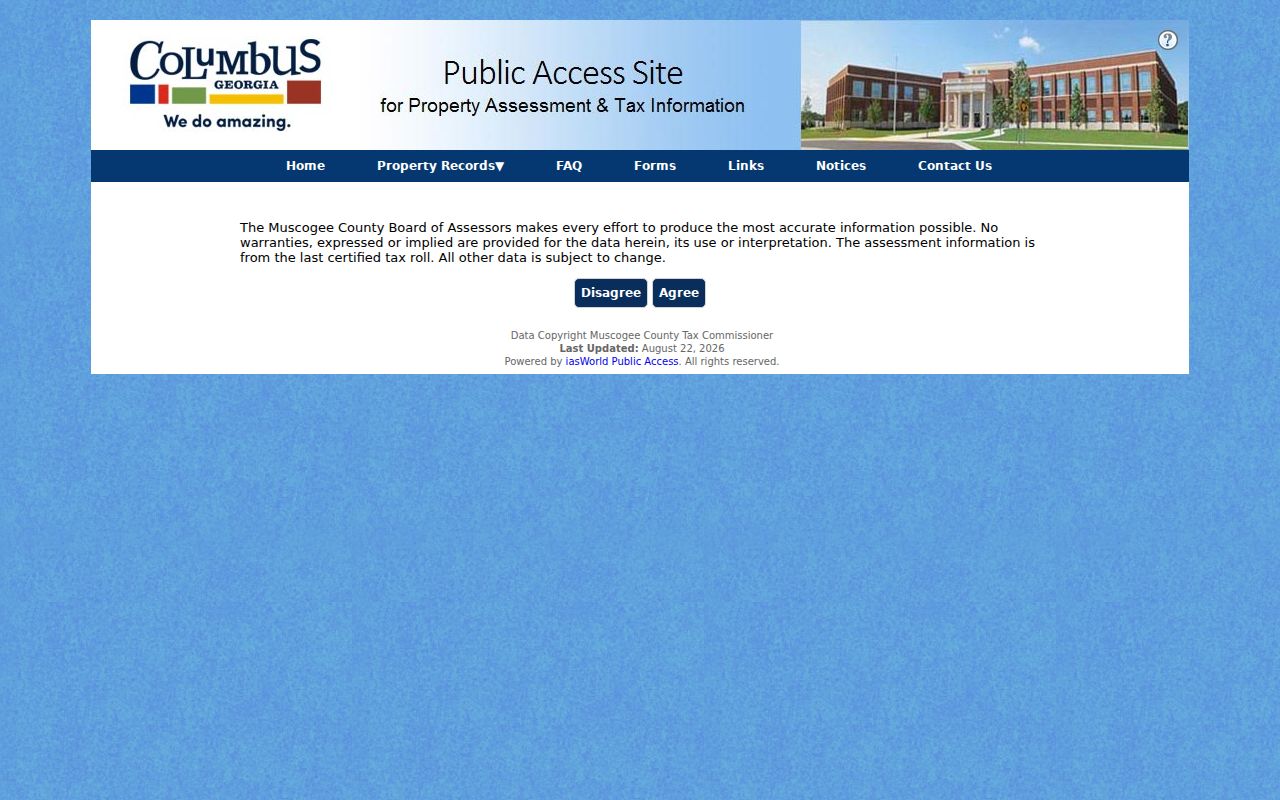
The official CCG Public Access Site is the strongest current address-to-owner starting point in the Columbus residents directory. Its tabs cover Owner Search, Parcel Search, Address Search, Advanced Search, and Map Search. A detailed card may list the owner, square footage, land and building values, assessment, tax profile, and sales history. The site cautions that assessment data reflects the last certified roll while other fields can shift. Treat the owner name as a property fact. It is not an occupancy statement.
| Search mode | Best use |
|---|---|
| Owner | Find parcels linked to a known owner name |
| Address | Identify the parcel and listed owner for a street address |
| Parcel | Return to one exact property without a name guess |
| Advanced or map | Explore an area when the portal fields support it |
The assessor image comes from the official owner-search entry. It displays the site-wide search tabs a researcher uses to switch from a person to an address or parcel.
Portals go down sometimes. When one does, or a field stays unclear, the assessor counter and its staff remain the source for the underlying card.
Columbus Deeds Connect Names
The Muscogee Clerk's local real-estate search and the GSCCCA statewide search hub tie people to recorded land papers. A name search places grantors and grantees in the index. A grantor transfers an interest. A grantee receives it. Book and page point to the recorded instrument, while subdivision, unit, block, and lot preserve the legal identity of land when a street number changes. The clerk publishes no stated cutoff for online coverage. So an empty web result never proves that an older deed is missing.
- Index
- A finding aid that points to a recorded file.
- Parcel
- A tract identified for assessment and mapping.
- Plat
- A recorded drawing that lays out lots, blocks, and easements.
- Certified copy
- An official copy authenticated by its custodian.
At the clerk counter, records staff can pull the recorded image by book and page. They cannot pick a legal form. They cannot give legal advice. Bring the exact name, an approximate date, the county, and the legal description to cut down false matches.
Georgia Voter Data Has Limits
Georgia My Voter Page asks for first initial, last name, date of birth, and county. One voter uses it to check registration, polling information, and ballot details. Georgia registers no voters by party. A Columbus residents directory should never promise a permanent party-registration field. Under O.C.G.A. §21-2-225, public elector data has firm exclusions. Month and day of birth, Social Security number, and email address are withheld. Driver's license number is withheld too. So is the place an application was submitted. Commercial use of the voter list is prohibited.
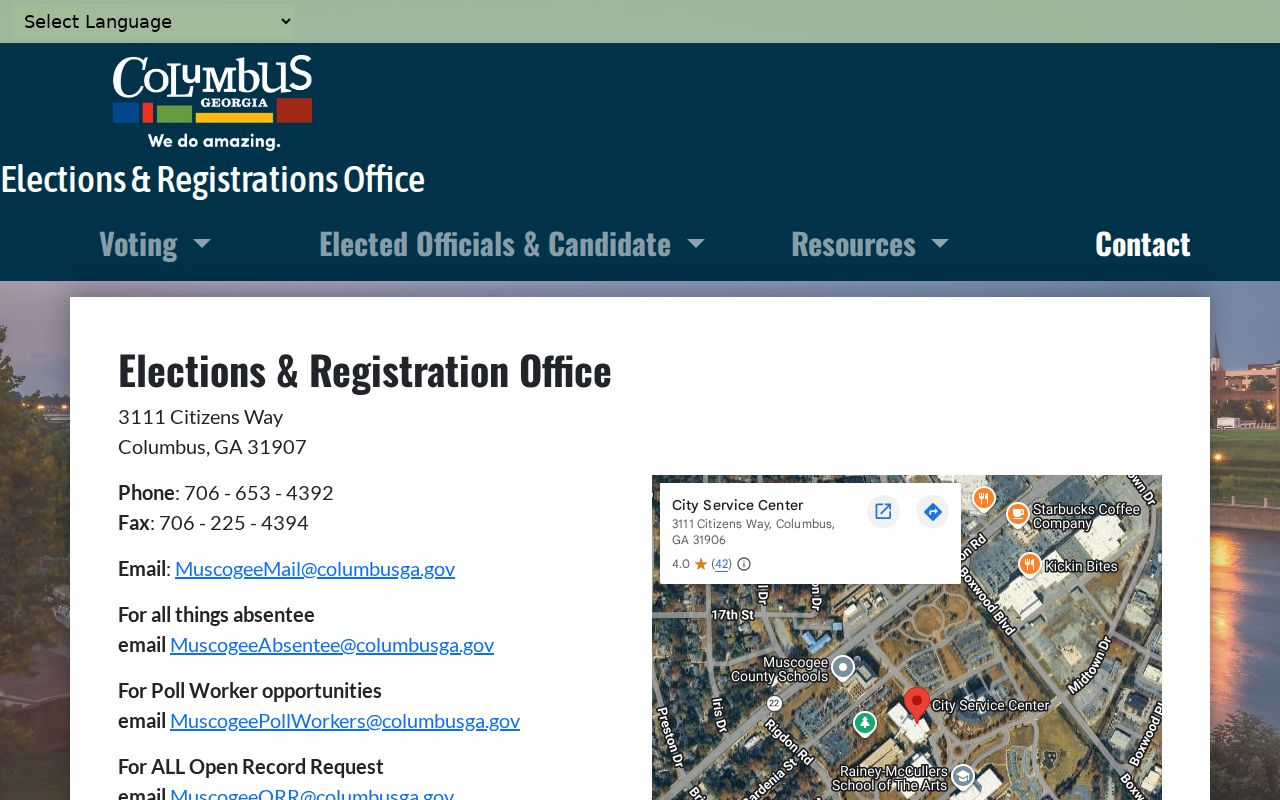
The official Muscogee elections contact page names the local office for a lawful records request. That page maps the custodian route for any voter-list question.
Protected VoteSafe and Safe at Home addresses should not be reconstructed through other records.
Current Columbus Resident Rolls
No single current Columbus residents directory is complete. Official rolls instead capture owners, registered voters, parties to recorded instruments, litigants in public cases, and people tied to public business filings. Community associations add a voluntary neighborhood layer. Their membership records are not an official count of everyone on a block. Choosing the roll that matches the question keeps the search narrow and stops an owner, registered agent, or deed signer from being mislabeled as a present occupant.
| Columbus roll | Relationship shown | Custodian | Route |
|---|---|---|---|
| Property roll | Assessed owners and parcel facts | Board of Assessors | Free public portal and counter |
| Voter record | One person's registration status | Secretary of State and local elections | Identity-input lookup or lawful request |
| Real-estate index | Parties to deeds, liens, and plats | Superior Court clerk | Local and statewide search, then counter |
| Court index | Parties to public cases | Superior, State, or Municipal Court | ePortal, eCourt, or clerk request |
| Business filings | Entity officers and registered agents | Georgia Secretary of State | Free business search |
A court index is only a pointer to a case. It is not a judgment about a person. A registered agent receives legal papers for an entity. Yet that role may carry no ownership stake at all. The Columbus resident lookup workflow shows how to compare two such rolls. It does not treat either one as a master household list for the city.
Columbus Courts Confirm Identity
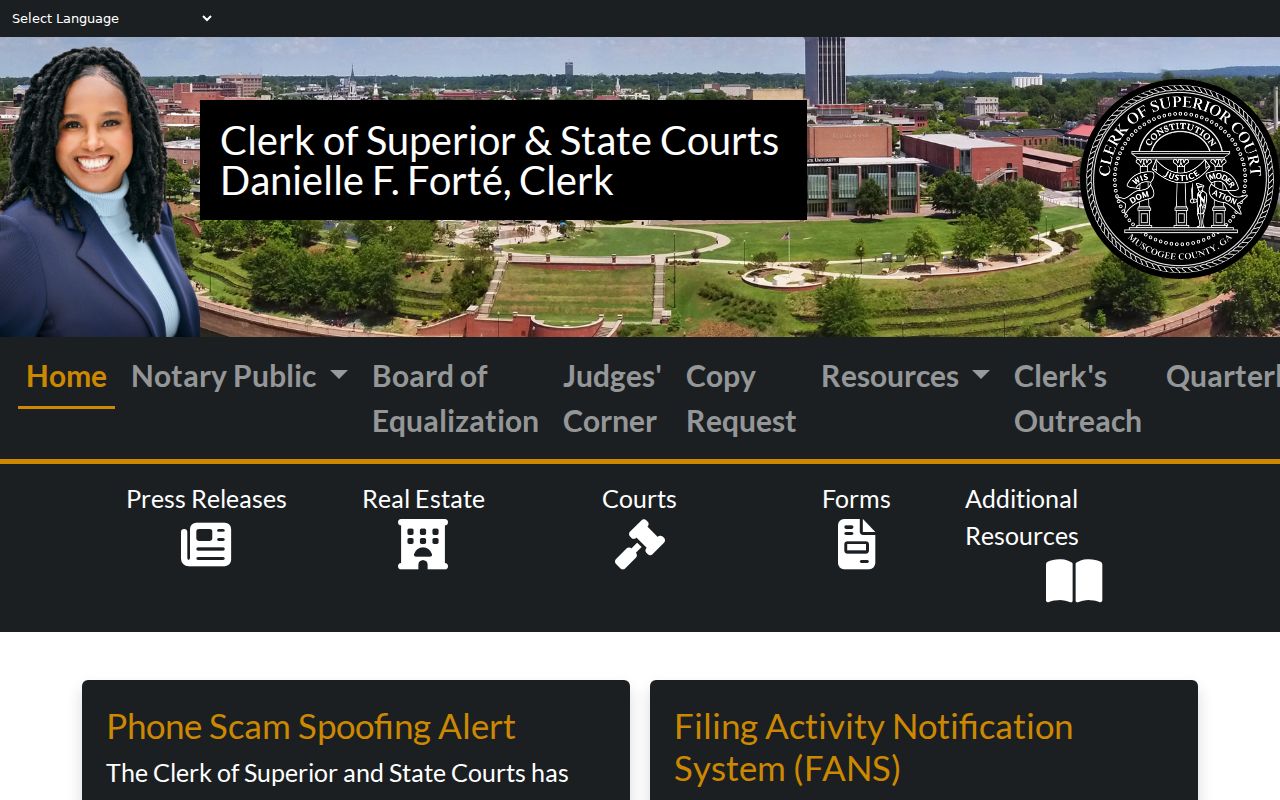
Two portals carry the court side of identity work in Columbus. The Muscogee Superior and State Courts ePortal links Smart Search, Jail Search, and Hearing Search. Municipal Court keeps its own separate eCourt route through the clerk's office. Party names, case numbers, filing dates, case type, and docket events are public. They can separate two namesakes cleanly. Sealed or confidential matters stay excluded. A docket is the court's chronological list of filings and events. It is not the full pleading, order, or certified disposition. The official court page displays the Superior and State portal links. It is the lasting source for them.
Sometimes the index simply does not answer the question. Then request the public file from the correct clerk, and provide a case number whenever one is available.
Columbus Records Request Fallback
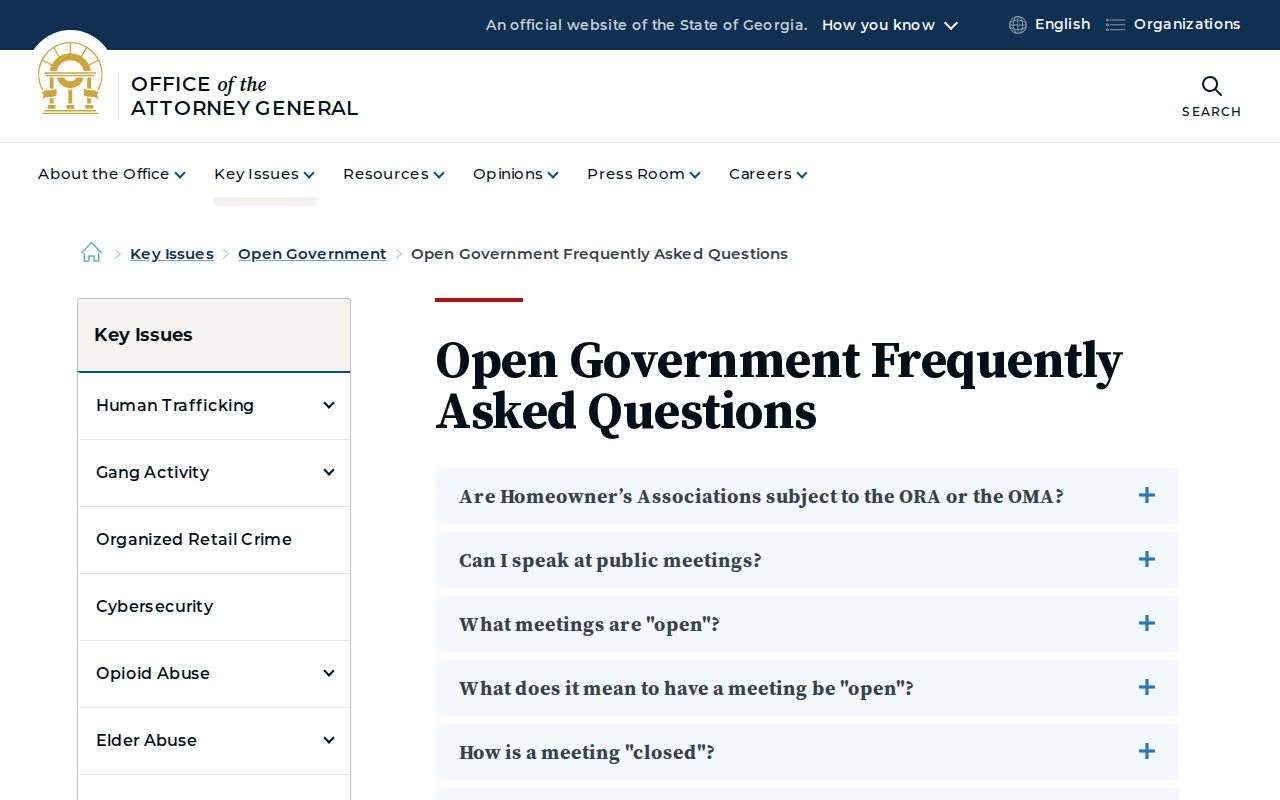
A portal failure does not end a Columbus residents directory search. Georgia's Open Records Act is O.C.G.A. §50-18-70 et seq. It generally requires an agency response within three business days. That response may hand over the record. It may cite an exemption instead. It may state when production will occur and what it will cost. An office has no duty to build a new report it never kept. Special programming, redaction, and staff time can all move the estimate. The Georgia Attorney General's open-government guidance explains the response rules. It also covers the fee framework agencies use.
Direct each request to the department that created the record. Columbus Police accepts requests online, by email, mail, phone, fax, and in person. When the right department is uncertain, the general City Attorney route serves as the fallback.
Columbus Cemetery and Obituary Indexes
The Columbus Public Library's Genealogy and Local History Department holds a dense set of name indexes. Coverage includes Muscogee death register entries from 1800 through 1899 and Enquirer-Sun deaths from 1900 through 1918. There is also a Ledger-Enquirer obituary index spanning 2006 through 2011. Marriages run from 1835 through 1929. Births cover August 1890 through 1900, and a birth register runs from 1901 through 1918. Those dates make the library far more than a last resort. A single death notice can name relatives, an occupation, a church, or an old street. That detail separates one Columbus resident from another with the same name.
The municipal cemetery database covers Linwood, Porterdale, East Porterdale, and Riverdale. It is explicitly a work in progress. So an absence is not proof that a burial never occurred. Pair every index hit with the original newspaper, register, cemetery entry, probate file, or death record. Do this before it enters a family tree.
Historical Columbus Resident Directories
Digitized Columbus city directories span verified volumes from 1859 through 1912. The run has gaps rather than one unbroken annual sequence. Publishers include Mears, Sholes, Polk, Zorn, and Walsh. The 1894 Zorn volume combines Columbus with Phenix City and Girard, Alabama. That cross-river detail matters when a person seems to vanish from Georgia. The verified Walsh 1898–99 street section works like an early reverse directory. It lists numbered addresses, occupants, businesses, vacancies, and cross streets in street order. Search OCR by surname, address, and employer, then verify the page image. Uncorrected text can distort names and house numbers. The Columbus city directory page details holdings at Columbus Public Library and Columbus State University Archives. It also covers census, newspaper, and Sanborn-map methods. Annual directories can place a household between federal censuses. Their abbreviations and racial labels, though, reflect the publishers and their era. They are never a modern description of any person.
Early Columbus Vital Registers
Columbus began local birth and death registration in August 1890. Georgia's statewide system did not start until 1919. That head start is a major residents-directory advantage for family history. The surviving library indexes may supply a name and a date. Custody divides by record type and period among the West Central Health District, Georgia Department of Public Health, Probate Court, Superior Court, and Georgia Archives.
Access rules depend on the record itself. Georgia birth certificates are not public under O.C.G.A. §§31-10-25 and 31-10-26. Certified death copies require a qualifying interest. An uncertified death record may reach anyone. Social Security number and cause of death are redacted. Marriage records are public, but marriage applications carry party restrictions. Use the index to locate the event. Then follow the custodian's identity, fee, and eligibility rules for the copy.
Safe Columbus Resident Research
Georgia Safe at Home began in 2024 under O.C.G.A. §50-18-150 et seq. It gives eligible survivors a substitute address. This shields their actual location across state and local public records. VoteSafe supplies voter-address protection under O.C.G.A. §21-2-225.1. A missing or substituted address may reflect lawful protection, not a database mistake.
Use records lawfully. Never combine official rolls to defeat an address-protection program, locate someone under a protective order, stalk, harass, or harm a person.
Ordinary corrections belong with each record's custodian. The assessor fixes property data, the clerk handles recorded instruments and court files, elections staff manage registration data, and a private publisher controls its own directory entry. Official corrections do not automatically flow into every commercial database or historical scan.
Columbus Business Name Cross-Checks
A Georgia business filing can answer a lot. The Georgia Corporations Division Business Search returns an entity's name, status, formation date, principal office, registered agent, and officers. Those fields help when a Columbus address shows up on an invoice, deed, permit, or old city directory. One caution applies. The listing proves neither that the registered agent owns the company nor that anyone actually lives at the office on file. The official business-search interface below also opens entity, officer, registered-agent, and filing routes for digging further.
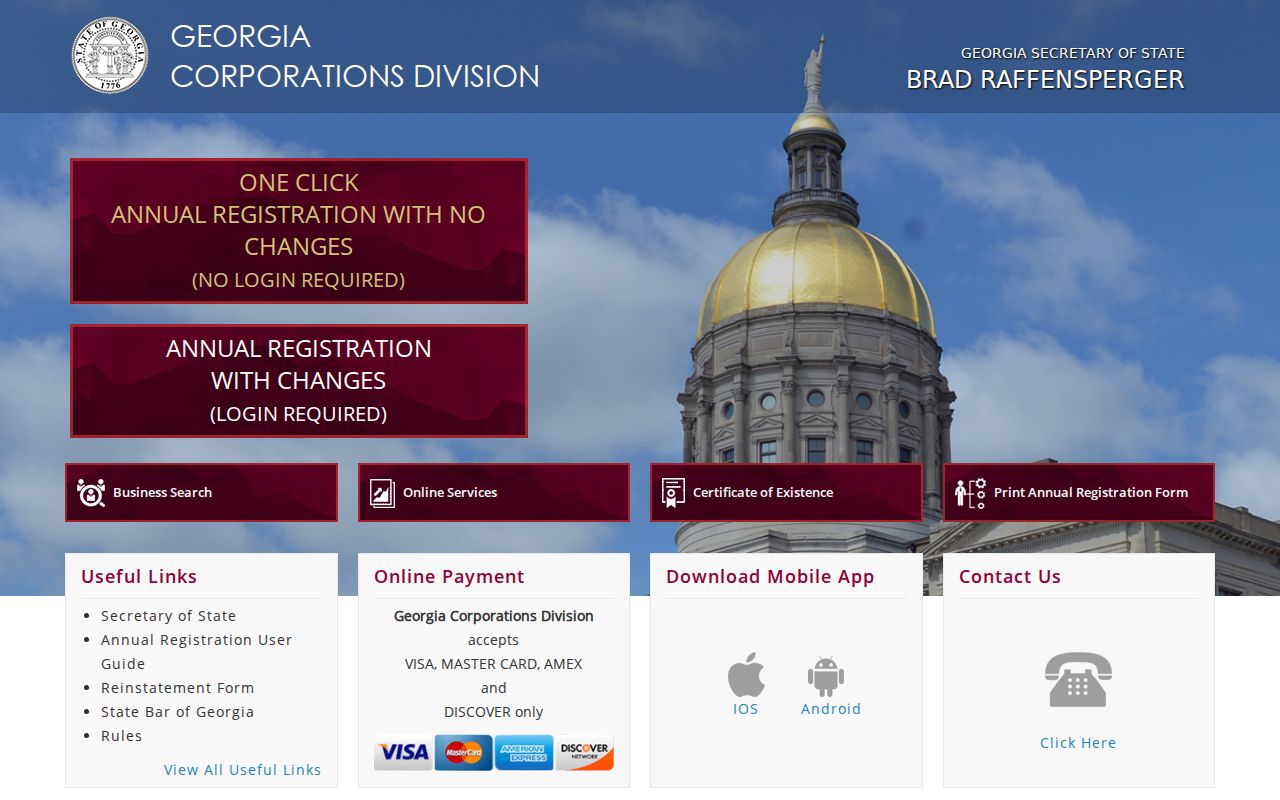
Put the filing beside the assessor card and the original public document. A shared name between a person and a business never establishes an identity match on its own.
Columbus Police Record Channels
Columbus Police keeps its record-request door open wide. Open-record requests go out by email, online form, mail, or fax. Paper mail heads to PO Box 1866. Phone orders reach 706-225-4306, or a walk-in visit to 510 10th Street works too. Readily available records usually arrive within three business days. 911 material is slower, with the department estimating two to eight weeks. Fees can include the lowest-qualified employee's prorated time, ten cents per page, and postage. Expect a written estimate once charges pass $25, and prepayment may be demanded above $500. The official Columbus Police request page shown here lays out every channel.
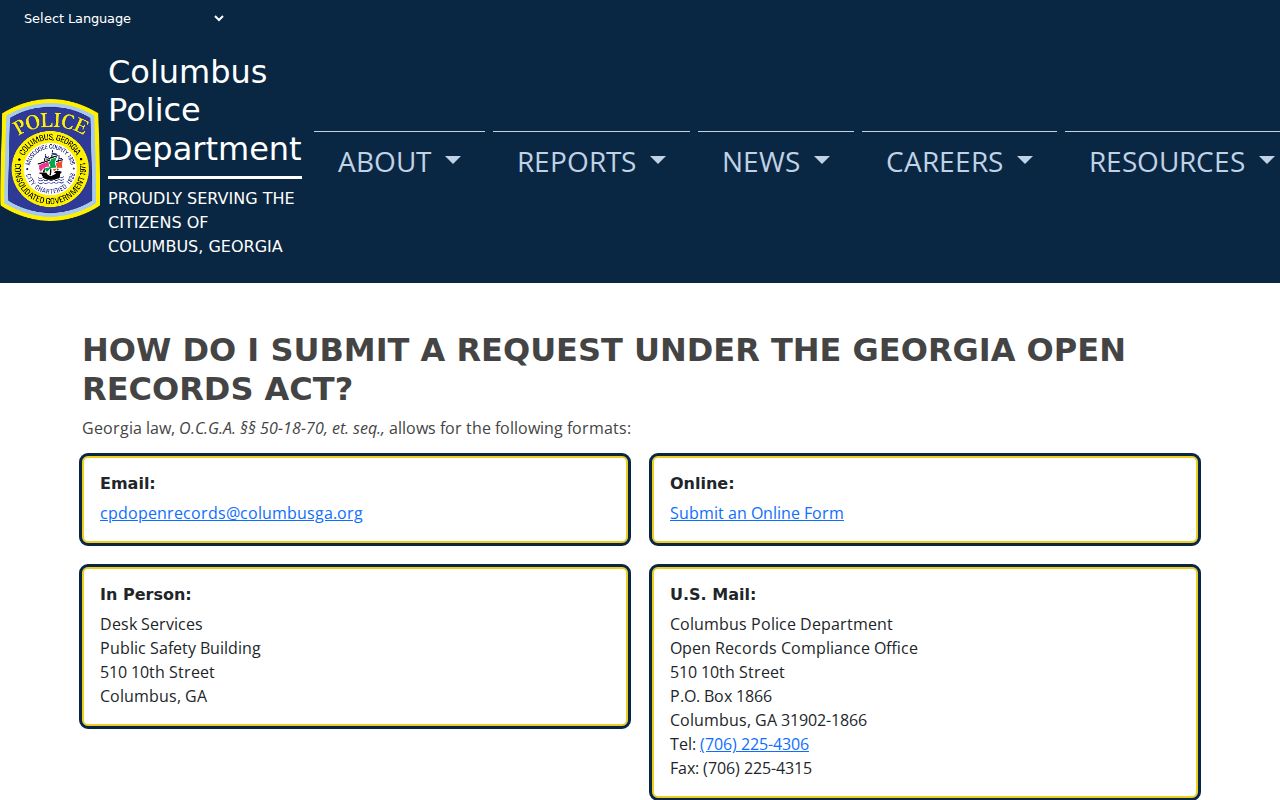
Frame the request around a known incident, date range, location, or report number. Privacy exemptions and redactions still govern what gets released. No request should ever be used to target a private person.
Verify Columbus Voter Status
For a single registration check, the state's My Voter Page is the tool to use. It works one voter at a time rather than as a neighborhood directory. Enter a few identity details plus the county, and it returns that registrant's election information on the spot.
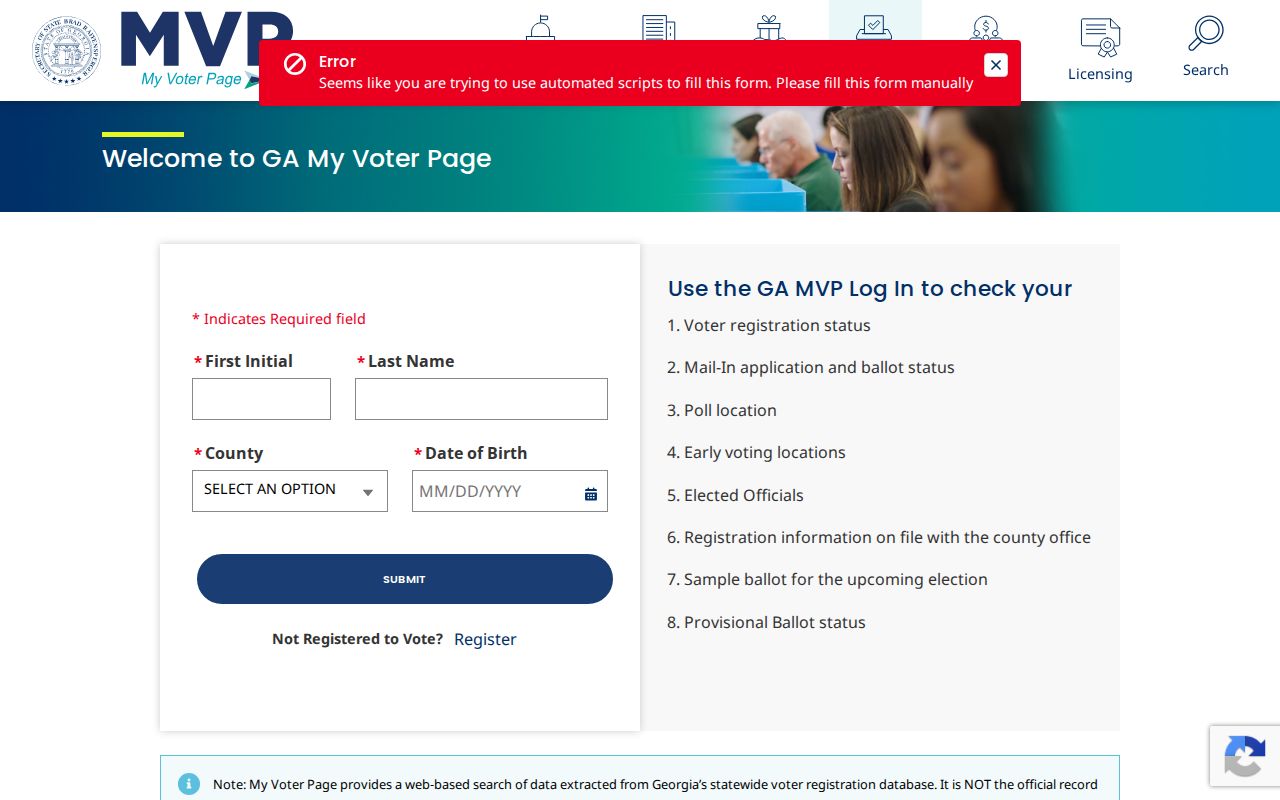
Treat the result as a lawful registration check and nothing more. A public voter-list request runs through the state's order process, and the statutory ban on commercial use stands.
Columbus Directory Search Boundaries
Why lean on official rolls instead of commercial people-finder summaries? Every field on an official record has a named custodian and a defined purpose. The trade-off is narrowness. Property records stop at ownership. Voter systems restrict access. Court portals skip sealed files. Historical directories mirror whatever a publisher collected. Commercial summaries, meanwhile, can stitch together stale addresses or mistaken namesakes. They should never stand in for the source record itself.
| Source type | Strength | Main limit |
|---|---|---|
| Official current roll | Named custodian and correction route | Only covers the roll's legal purpose |
| Historical directory | Period address, occupation, and household context | Gaps, abbreviations, and OCR errors |
| Commercial summary | Broad lead generation | May be stale, merged, or unsourced |
Keep notes during any Columbus residents directory search. Record the source, the date accessed, exact spellings, and stable identifiers like a parcel, case number, or book and page. That small audit trail pays off. It makes later verification far easier.